
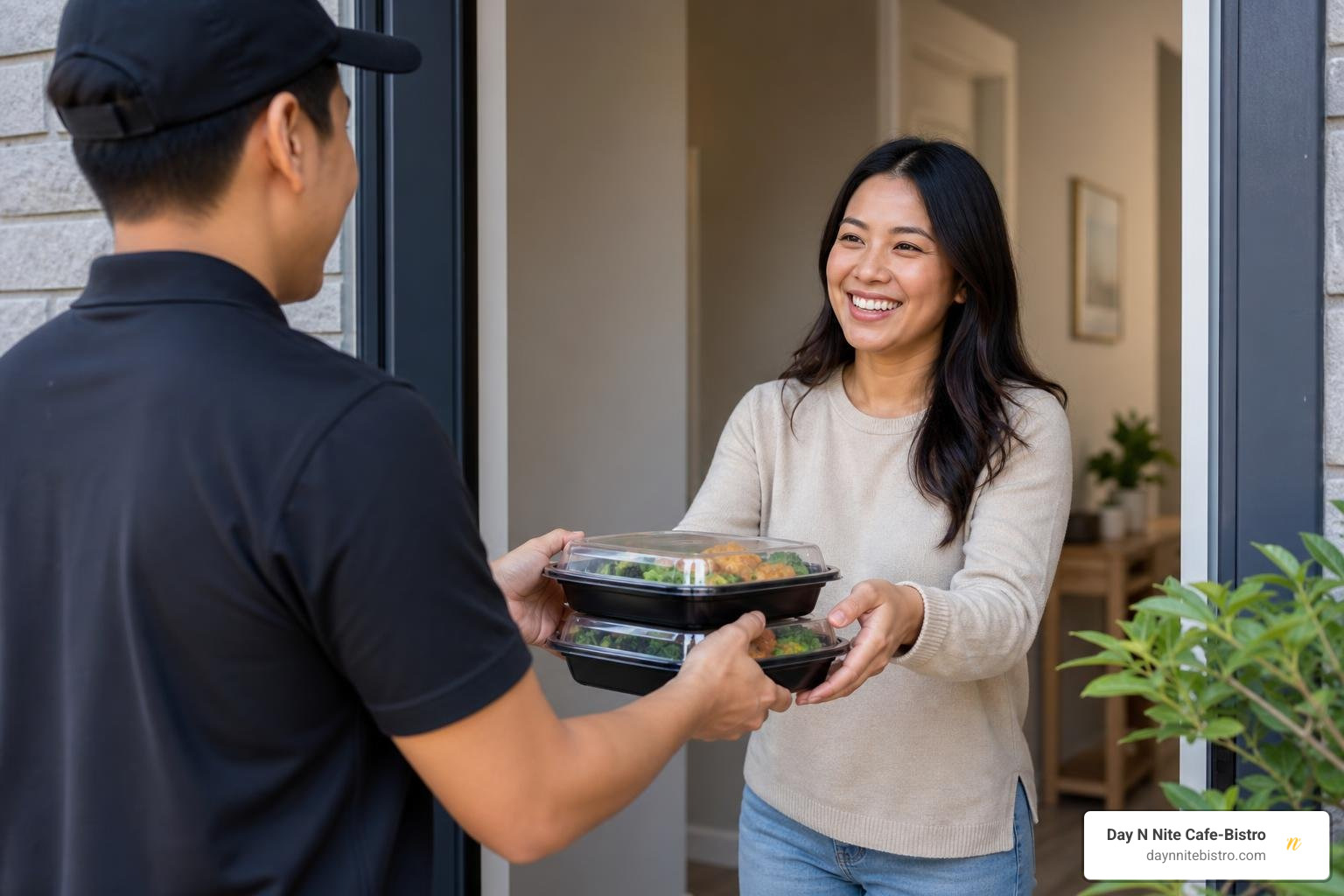
X Best Takeout Services for Beginners
Why Takeout Service Is the Smarter Way to Eat on a Busy Day
A great takeout service lets you enjoy restaurant-quality food on your own schedule — no waiting for a table, no rushing through a meal.
Quick answer: What is a takeout service?
Feature What It Means for You What it is You order food from a restaurant and pick it up yourself How it works Order online, by phone, or in person — then grab your food when it's ready Cost Usually cheaper than delivery — no delivery fee or driver tip required Best for Busy people who want fresh, hot food fast without dining in vs. Delivery You pick up the food instead of having it brought to you vs. Dine-in You eat at home instead of at the restaurant
Whether you're grabbing breakfast before work or picking up brunch for the whole family, takeout gives you the flexibility that dine-in and delivery often can't match.
The numbers back this up. Drive-throughs alone generated 31% of all US takeout turnover by 1990 — and that was before smartphones, apps, or curbside pickup even existed. Today, the options are faster, easier, and more customizable than ever.
But not all takeout experiences are created equal. The method you choose — and the restaurant you order from — makes a big difference in food quality, cost, and convenience.
This guide breaks it all down so you can order smarter from day one.
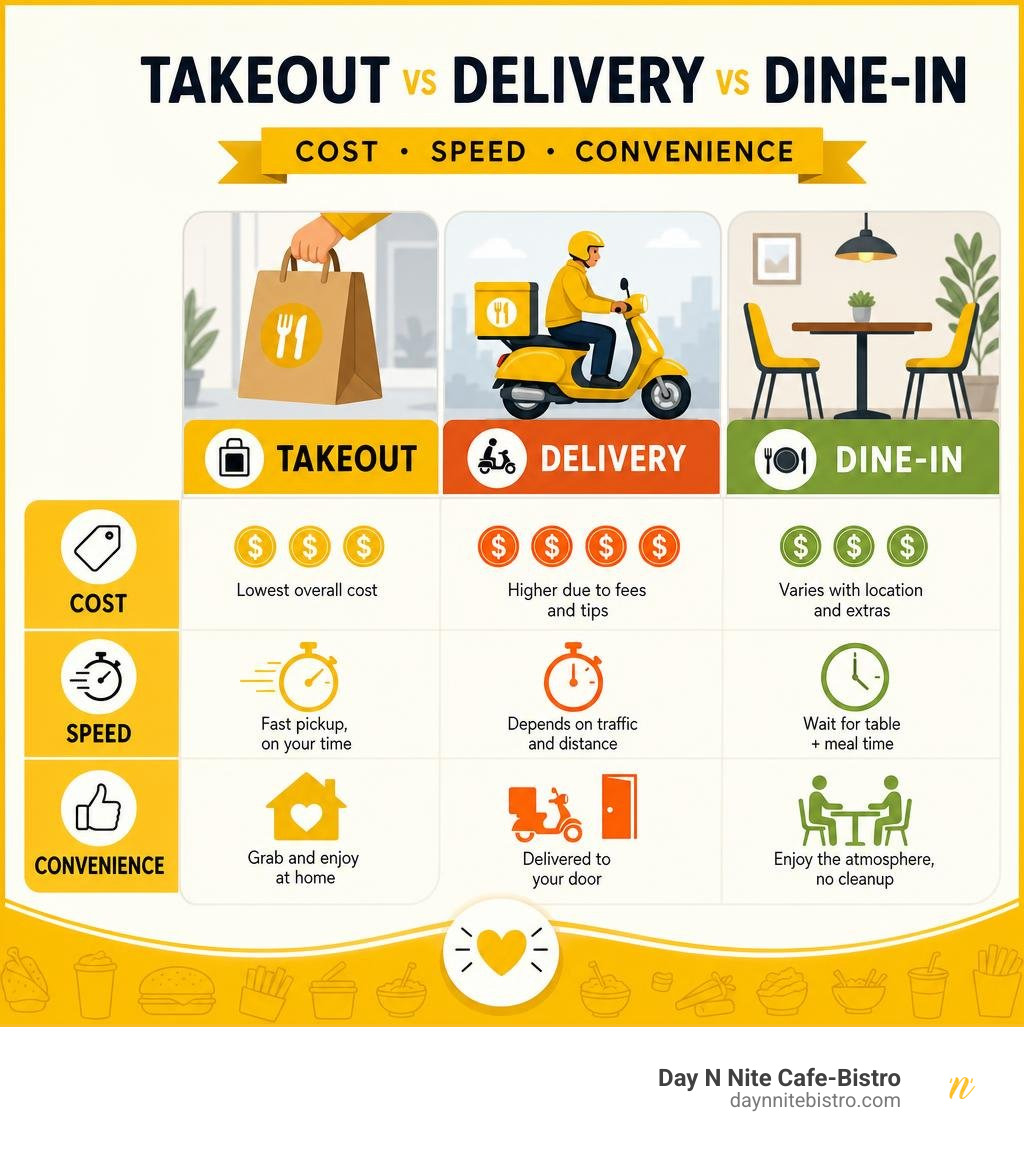
What is a Takeout Service and How Does It Work?
To get the most out of your dining budget and schedule, it helps to understand exactly what a takeout service entails. At its core, takeout is the middle ground between cooking at home and dining out. It gives you the chef-level quality of restaurant cooking with the comfort of eating at your own kitchen table.
Here is how the three main dining options stack up:
Feature Dine-In Delivery Takeout Service Convenience Low (requires travel & waiting) High (food comes to you) Medium-High (quick trip to pick up) Average Cost High (tips, drinks, service) Very High (fees, driver tips, markups) Low-Medium (base food price only) Food Freshness Maximum (straight from kitchen) Variable (depends on driver route) High (you control the trip home) Control Over Order High Low High
The Order Placement and Pickup Process
The modern takeout pipeline is incredibly streamlined. You place your order through a digital portal, over the phone, or at the counter. The kitchen receives your order, prepares it with travel-friendly packaging, and places it in a designated pickup zone. When you arrive, you grab your food and go. There is no waiting for a server to bring your check or waiting in a long line for a delivery driver to find your house.
Food Quality Preservation
One of the biggest advantages of picking up your own food is quality control. When you use third-party delivery, your food might sit in a driver's car while they make three other stops. With takeout, you are in charge of the transit. You can head straight home, ensuring your crispy fries stay crispy and your hot soup stays steaming.
The 5 Best Takeout Methods for Beginners
If you are new to ordering food to-go, navigating the different options can feel overwhelming. Here are the five most convenient takeout methods explained.
1. Direct Online Ordering
Ordering directly through a restaurant's own website is the gold standard of takeout. Because there is no middleman, your order goes straight to the kitchen's printer, reducing the chance of errors. It also ensures that 100% of your money goes to supporting the local business, avoiding the steep commission fees that third-party apps charge restaurants.
2. Curbside Pickup
Curbside pickup is the ultimate convenience hack for parents with kids in the car, busy professionals, or anyone who doesn't want to find parking. You order ahead, drive up to a designated parking spot outside the restaurant, and a staff member brings the food directly to your window.
3. Traditional Call-Ahead
For those who prefer a human touch, calling the restaurant directly is a classic choice. It allows you to ask the staff direct questions about daily specials, clarify ingredients, and make highly specific customization requests that online forms might not accommodate.
4. Walk-In Counter Service
Sometimes you don't know what you want until you see it. Walking in and ordering at the counter lets you soak in the restaurant's atmosphere, look at the physical menu, and grab your meal fresh off the grill. While you do have to wait a few minutes for your food to cook, it guarantees the absolute freshest meal possible.
5. Contactless Pickup
Many modern cafes and restaurants feature designated grab-and-go shelves or secure cubbies. Your order is placed in a bag labeled with your name. When you arrive, you simply walk in, find your bag, and walk out without needing to interact with anyone—perfect for introverts or those on a tight schedule.
Traditional Restaurant Pickup as a Takeout Service
Before the internet, getting food to-go meant calling a local spot, placing your order with a busy host, and driving down to pick it up. This traditional method remains incredibly popular because of its simplicity and reliability.
When searching for a high-quality Local Take-Out Near Me, you will find that local favorites offer a level of care that massive national fast-food chains cannot replicate.
If you are exploring the broader regional food scene, resources like Best Take Out Salt Lake City 2026 - Gastronomic SLC highlight how local independent eateries across Utah have perfected the art of the traditional pickup, keeping food fresh and hot for the ride home.
Direct Online Ordering for Takeout Service
The rise of mobile-friendly menus has completely transformed how we buy food. Instead of squinting at a blurry photo of a paper menu on a search engine, you can now browse interactive, up-to-date digital menus with clear pricing and ingredient lists.
When you use a direct portal to See Menu & Order, you get instant confirmation that your order has been received and an accurate estimate of when it will be ready.
Best of all, ordering directly through a restaurant's website helps you avoid the hidden convenience fees, service charges, and menu markups often found on third-party marketplace apps. When you choose to Order Online directly through our system, you get the best possible price and the most accurate pickup window.
The Evolution and History of To-Go Dining
While we think of the modern takeout service as a product of the smartphone era, eating on the go is actually as old as civilization itself.
In ancient Rome, most urban citizens lived in small apartments without kitchens. To eat, they relied on thermopolia—early street-side food counters built into the streets. Archaeologists in Pompeii have uncovered over 200 of these hot-food shops, where locals bought quick meals of lentils, cheese, and hot spiced wine to eat on the street.
In medieval Europe, street vendors in London, Paris, and Kaifeng sold hot meat pies, geese, and pastries. By the 10th and 11th centuries in China, shops in Kaifeng had upwards of fifty ovens constantly baking pastries for busy city dwellers.
The industrial revolution accelerated this trend, creating a massive class of factory workers who needed fast, calorie-dense food. This era gave rise to iconic takeout items like British fish and chips, wrapped in newspaper for a quick walk home.
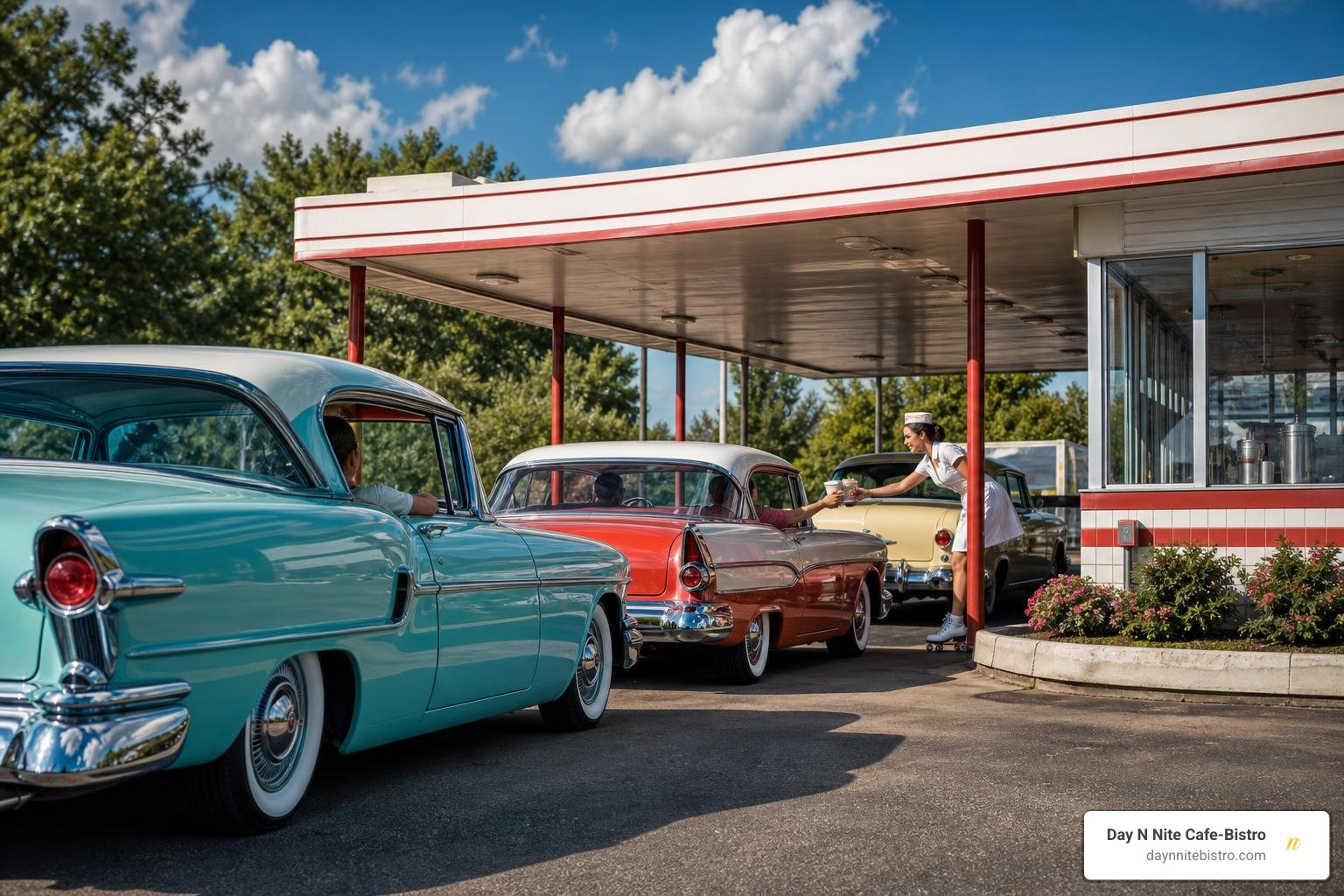
The mid-20th century brought the automobile, which changed everything. The drive-through was pioneered in 1931 at Pig Stand Number 21 in California. By 1988, 51% of McDonald's turnover was being generated by drive-throughs alone. By 1990, drive-throughs accounted for 31% of all US takeout turnover.
The Pandemic and the Digital Boom
The COVID-19 pandemic acted as a massive catalyst for the industry. Almost overnight, traditional dine-in spaces closed, forcing restaurants to pivot entirely to curbside pickup and delivery.
This period cemented the rise of third-party delivery apps. However, the convenience of delivery has come at a massive cost. In 2024, food delivery companies in the United States and Europe amassed more than $20 billion in combined operating losses. The high fees charged to both consumers and restaurants have led many diners to return to picking up their own food directly.
Today, the industry is defined by innovative models like ghost kitchens (facilities built exclusively for preparing to-go food), smart contactless pickup shelves, and automated ordering systems.
Pros, Cons, and Costs of Takeout

Like any dining option, choosing a takeout service comes with its own set of trade-offs. Understanding these can help you decide when to pick up your food and when to sit down at a table.
The Pros: Why We Love Takeout
Saves Time: You don't have to wait for a table, wait for a server, or wash dishes at home.
Saves Money: You get restaurant-quality food without paying for delivery fees, service surcharges, or expensive dine-in drinks.
Ultimate Comfort: You can eat gourmet food in your pajamas while watching your favorite show.
Supports Local Businesses: Ordering takeout directly helps local restaurants keep 100% of their food revenue, bypassing third-party app cuts.
The Cons: The Trade-Offs
Temperature Loss: Food naturally cools down during the drive home.
Textural Changes: Crispy fried foods can steam inside closed containers, losing their crunch.
The Drive: You still have to leave your house and navigate traffic to pick up your meal.
The True Cost of Takeout
When you dine in, you pay for the food, tax, and a standard 15% to 20% tip for your server.
When you order delivery through third-party platforms, the costs can pile up quickly. You face delivery fees, service fees, and driver tips, and many restaurants must raise their app prices to cover the platform's high commission fees.
Takeout is almost always the most cost-effective way to enjoy restaurant food. You only pay for the food and local tax. While a small tip for the restaurant staff who packed your order is always appreciated, it is completely optional and typically lower than a full sit-down service tip.
Food Safety, Regulations, and Dietary Customization
When you eat inside a restaurant, the food travels mere yards from the kitchen to your table. With a takeout service, that food has to travel miles. This makes strict food safety regulations and careful preparation incredibly important.
Keeping Food in the Safe Zone
Local health codes require restaurants to maintain strict temperature controls. Hot foods must be held above 140°F, and cold foods must stay below 40°F to prevent bacterial growth. High-quality takeout operations use specialized insulated packaging to keep your food in these safe zones during your drive.
Handling Dietary Restrictions and Allergies
For diners with severe food allergies, ordering takeout requires trust. Unlike dining in, where you can easily flag down a server if something looks wrong, takeout orders must be correct the moment they leave the building.
To ensure safety:
Restaurants use strict cross-contamination protocols in the kitchen.
Gluten-free, dairy-free, and nut-free items are prepared using dedicated utensils and clean surfaces.
Orders are packaged in separate containers with clear labels to prevent mix-ups.
If you are curious about the rules governing online ordering and food safety, you can review our official guidelines on the Terms of Service - Day N Nite Cafe-Bistro page.
Even global takeout traditions emphasize customization to meet dietary needs. For example, high-end bento takeout services, such as 福岡、舞鶴、赤坂で仕出し弁当のテイクアウト・持ち帰り、デリバリー・配達 , allow customers to customize their meals based on budget, seasonal availability, and personal preferences, showcasing how adaptable takeout can be.
Environmental Impact and Sustainable Packaging Solutions
The convenience of to-go dining has a significant environmental footprint. The rise of takeout and delivery has created a massive surge in single-use plastic, foam, and paper waste.
The Scale of the Waste Problem
To understand the environmental impact of single-use items, consider these striking facts:
Chopstick Waste: Globally, about 80 billion pairs of disposable chopsticks are thrown away annually. China alone produces about 80 billion pairs of single-use chopsticks yearly, which is the equivalent of clearing 20 million 20-year-old trees.
Packaging Spikes: The rapid growth of food delivery in China caused packaging waste to skyrocket from 20,000 metric tons in 2015 to a staggering 1.5 million metric tons in 2017.
Successful Global Solutions
Governments and cities around the world have proven that we can enjoy takeout without destroying the planet:
Taiwan's Bold Ban: In 2013, Taiwan's Environmental Protection Administration (EPA) banned the use of disposable tableware in 968 schools, government agencies, and hospitals. This single initiative was expected to eliminate 2,600 metric tons of waste every year.
The Munich Miracle: Munich successfully reduced the waste generated by Oktoberfest (which attracts millions of visitors) from 11,000 metric tons in 1990 to just 550 tons in 1999 simply by banning single-use containers at the event.
Sustainable Alternatives
Today, forward-thinking restaurants are moving away from styrofoam and plastic in favor of biodegradable paperboard, molded sugarcane fiber, and reusable container programs.
Even alternative food models are finding ways to reduce waste. Shelf-stable options like Takeout Kit | Shelf Stable Meal Kits | Best Meal Kit Delivery Service reduce food waste by sending exact ingredient portions. Meanwhile, gourmet meal prep services like Fresh Gourmet Takeaway - Meals Made Easy! and Bay Area Food Delivery - Meals Delivered by Jessie & Laurent use efficient, family-sized packaging to minimize the environmental footprint of daily dining.
Frequently Asked Questions about Takeout
How do takeout costs compare to dining in?
Takeout is almost always cheaper than dining in or ordering delivery. Because you are not using a table or server, you save on expensive table-service tips and dine-in drinks. Unlike delivery, you also avoid service fees, delivery surcharges, and driver tips. You only pay for the food you eat.
What is the best way to keep takeout food fresh and hot?
To keep your food tasting fresh:
Use an Insulated Bag: Keep a reusable thermal bag in your car trunk for food pickups.
Vent the Steam: If you are carrying crispy foods like fries or toast, crack the container lid slightly so steam can escape, keeping them from getting soggy.
Reheat Smartly: Use an oven, air fryer, or skillet instead of a microwave to reheat leftovers. This helps restore the original texture of the food.
How do restaurants handle severe food allergies for to-go orders?
Reputable kitchens treat takeout allergies with the same seriousness as dine-in orders. Chefs use clean prep stations, separate utensils, and clearly label the allergen-safe boxes. When ordering, always write your allergy in the notes section of the online order form and consider calling the kitchen directly to double-check.
Conclusion
The modern takeout service has come a long way from the ancient street stalls of Rome. Today, it is the ultimate tool for busy people who want to eat fresh, high-quality meals on their own terms.
At Day N Nite Cafe-Bistro, we specialize in crafting fresh, delicious breakfast, brunch, and lunch dishes using premium seasonal ingredients. Located at 454 N Main Street in Heber City, Utah, we have designed our menu to travel perfectly, ensuring you get a hot, satisfying meal every single time.
Ready to skip the kitchen mess and enjoy a gourmet meal at home?
See Menu & Order from Day N Nite Cafe-Bistro today, or Contact us to learn more about our daily specials!

