
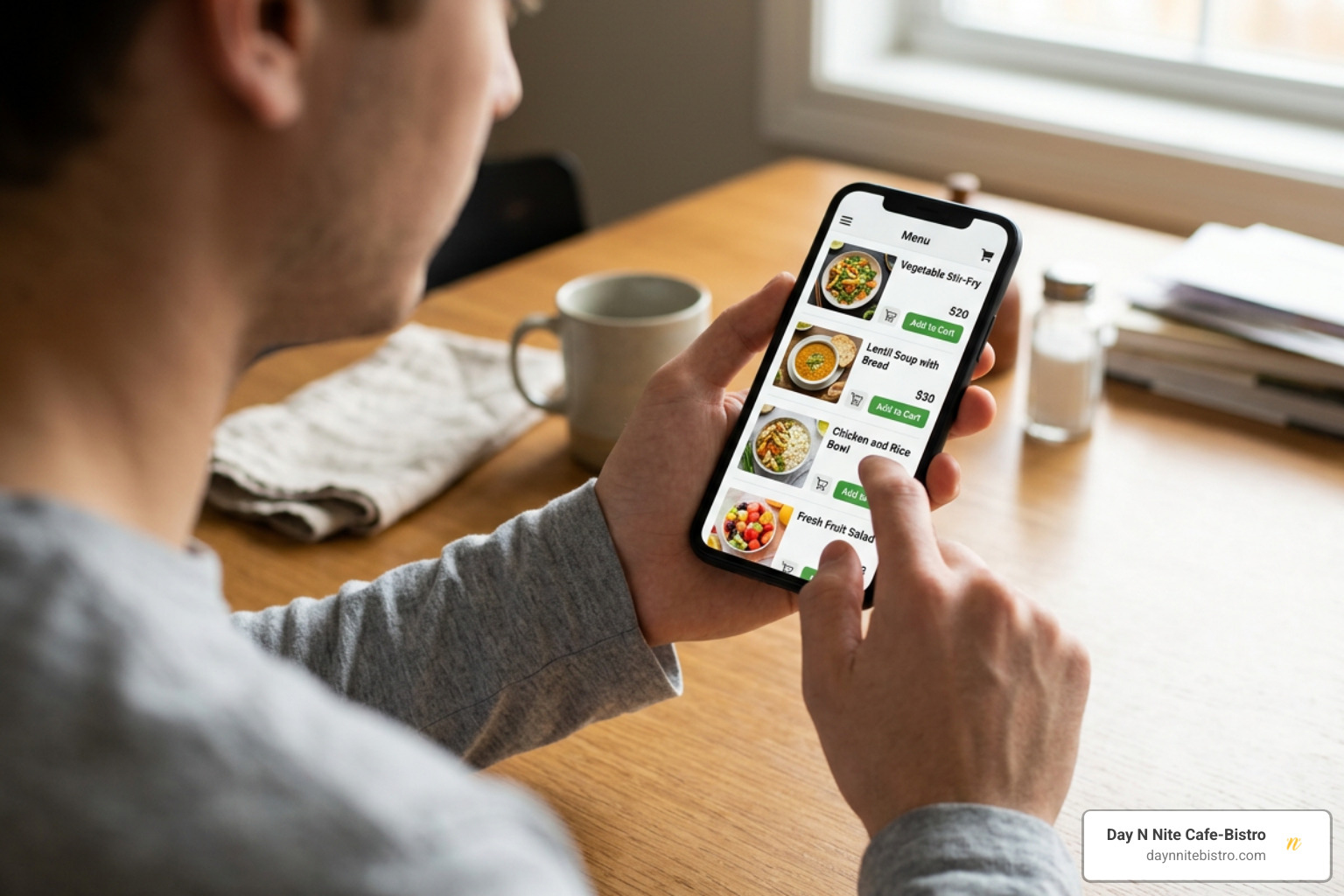
Cheat Sheet to Online Food Ordering & Delivery
How Online Food Ordering Works — and Why It's Changed the Way We Eat
Online food ordering is the process of browsing a restaurant's menu and placing a food order through a website or app — for delivery to your door or pickup at the restaurant.
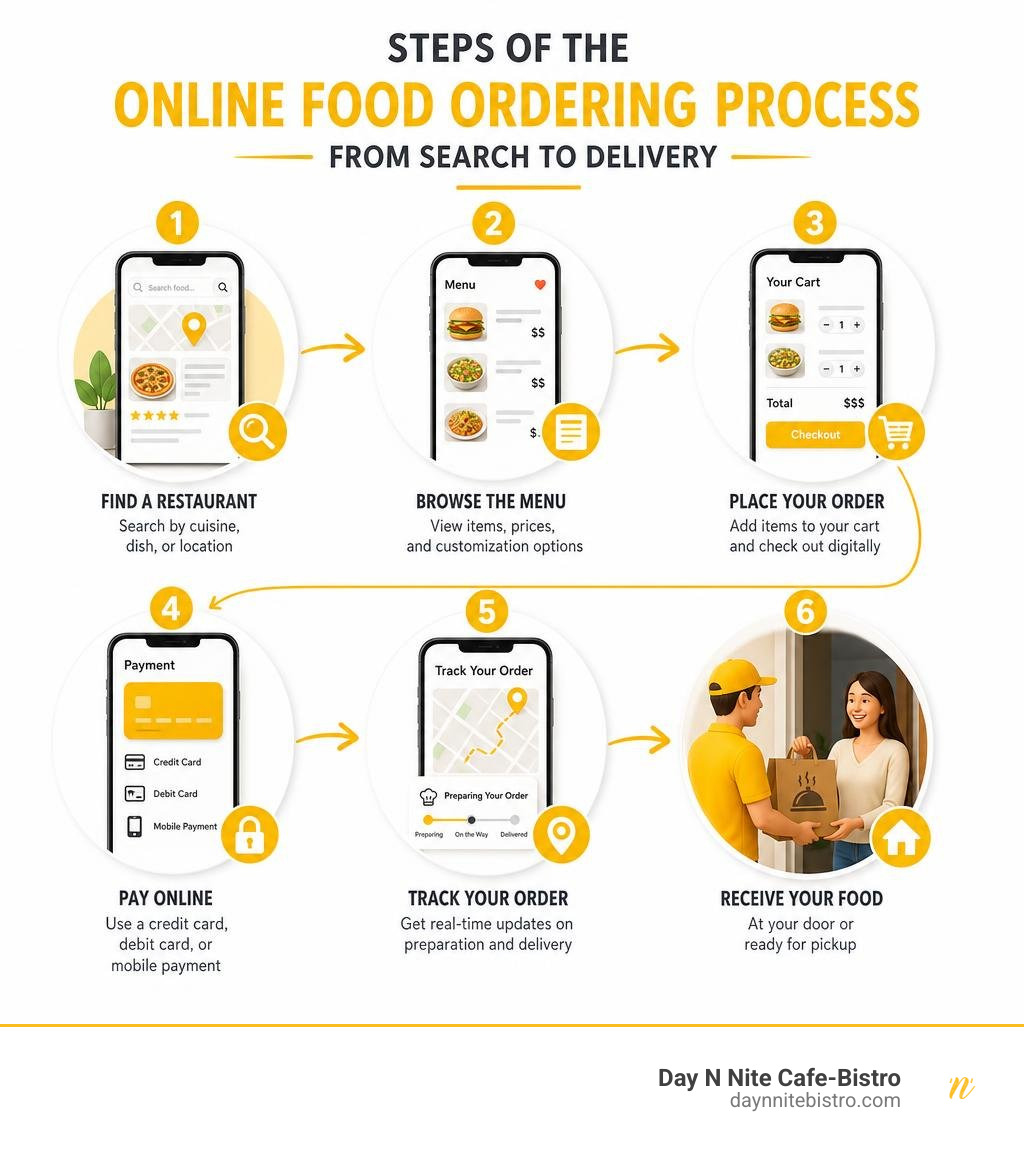
Here's a quick breakdown of how it works:
Find a restaurant — Search by cuisine, dish, or location on an app or restaurant website
Browse the menu — View items, prices, and customization options
Place your order — Add items to your cart and check out digitally
Pay online — Use a credit card, debit card, or mobile payment
Track your order — Get real-time updates on preparation and delivery
Receive your food — At your door or ready for pickup
It wasn't always this easy. The very first online food order was placed in 1994 — a pizza from a national pizza chain. Fast forward to today, and the global online food delivery market has grown from $90 billion in 2018 to $294 billion by 2021. That's not a trend. That's a transformation.
By 2015, online ordering had already overtaken phone ordering in the United States. And by 2018, online restaurant orders were growing 300% faster than dine-in traffic.
Whether you're a busy parent, a remote worker, or just someone who wants a great meal without leaving home, online food ordering has become one of the most convenient tools in daily life.
This guide covers everything you need to know — from the types of platforms available, to how restaurants handle digital orders, to what it all costs and who benefits most.
The Evolution of Online Food Ordering
To fully understand how we arrived at the point where a hot breakfast can appear on our doorstep with a few taps of a thumb, we have to look back at the digital path that brought us here. The journey of online food ordering is a fascinating tale of technological integration, changing consumer habits, and a massive cultural shift in how we define "convenience."
How Online Food Ordering Began
Long before mobile apps dominated our home screens, the concept of ordering food through a computer was a highly experimental novelty. As mentioned, the historic milestone occurred in 1994 when a national pizza chain launched an experimental web portal that allowed anyone with an internet connection (and a very patient dial-up modem) to order a pepperoni pizza.
In those early days, the infrastructure was primitive. Most homes didn't have internet access, and those that did had to tie up their phone lines to use it. Consequently, phone ordering remained the undisputed king of takeout for another two decades. However, national chains recognized the potential of digital channels early on. For instance, by 2010, online sales for major national delivery brands had already exceeded billions of dollars globally.
As smartphones became ubiquitous in the early 2010s, the industry reached a critical tipping point. Mobile apps made it possible to order on the go, save payment details, and store favorite meals for one-click reordering. By 2015, online food transactions officially began overtaking traditional phone calls in the United States. Consumers quickly realized that browsing a digital menu was far superior to shouting an order over a noisy kitchen background or repeating credit card numbers to a busy host.
The Modern Era of Online Food Ordering
The late 2010s and early 2020s saw an unprecedented explosion in market size and consumer adoption. The global market for online-ordered prepared food delivery was estimated at $94 billion in 2019 and was projected to reach $134.5 billion by 2023. However, the arrival of the COVID-19 pandemic in 2020 completely shattered those projections, acting as a massive accelerant.
With dining rooms closed worldwide, online ordering transitioned overnight from a modern convenience to an essential lifeline for both restaurants and households. Global revenues for the online food delivery sector rose from $90 billion to $294 billion between 2018 and 2021. In places like China, the growth was even more astronomical, with the online food ordering and delivery market expanding from 0.15 billion yuan to a staggering 44.25 billion yuan by late 2015, setting the stage for the hyper-dense delivery networks we see globally today.
As of July 2026, the modern landscape has matured into a sophisticated ecosystem. What started as a basic transaction has evolved into an integrated lifestyle service. Consumers no longer just order pizza; they order gourmet brunch, local artisan coffees, and custom dietary meals. The technology has matured to include predictive AI recommendations, seamless mobile wallet integrations, and complex routing algorithms that ensure your food arrives hot, fresh, and exactly when you expect it.
Types of Digital Food Delivery Services
Not all digital food ordering experiences are created equal. Depending on how you order, who prepares the food, and who brings it to your door, the process can look very different. Today's digital food landscape is broadly divided into two main categories: restaurant-controlled systems and third-party delivery platforms.

Restaurant-Controlled Ordering Systems
A restaurant-controlled ordering system is a direct-to-consumer model. In this setup, you order directly through our website or proprietary app. The restaurant handles the entire transaction, manages the digital menu, and often employs its own delivery drivers or coordinates direct curbside pickup.
For local businesses, this model is incredibly valuable. It allows us to keep our prices fair, maintain direct communication with you, and ensure that our high standards of hospitality are maintained from the kitchen to your table. When you choose a direct Takeout Service, you are interacting directly with the people making your food, which reduces errors and fosters a stronger community connection.
Many national brands also rely heavily on this model to maintain brand loyalty. By ordering directly through a restaurant's proprietary website, customers can often earn rewards points, access exclusive deals, and enjoy a more personalized experience. Similarly, local favorites utilize direct online portals to offer specialized options, such as easy pickup systems that streamline the takeout process.
Third-Party Delivery Platforms
Third-party delivery platforms act as multi-restaurant marketplaces. These companies do not prepare food themselves; instead, they list hundreds of local restaurants on a single app, allowing users to compare cuisines, read reviews, and place orders. The platform then dispatches an independent gig-economy driver to pick up the food and deliver it to the customer.
These platforms offer unparalleled variety and convenience. Within a single app, you can browse everything from national fast-food chains to local independent cafes. Prominent players in this space include:
Global Delivery Apps: Platforms operating in hundreds of cities worldwide allow users to explore a wide variety of local dining options with the tap of a button.
National Marketplaces: Well-known services offer the ability to deliver almost anything from local merchant networks directly to your door.
Specialized Logistics Services: Specialized providers cater to corporate events and business deliveries, proving that third-party logistics can serve both casual diners and large organizations alike.
How Digital Ordering Works for Consumers and Restaurants
Behind every completed digital order is a complex, synchronized dance of technology, logistics, and kitchen coordination. Let's pull back the curtain and look at how this process unfolds on both sides of the counter.

The Consumer Experience
For you, the diner, the process is designed to be as frictionless as possible. It starts when you open an app or website to search for a Local Take-Out Near Me.
Once you select a restaurant, the digital menu serves as your interactive portal. You can customize your order in ways that might feel awkward over the phone—adding extra sauce, swapping sides, or specifying dietary preferences (like gluten-free or dairy-free modifications) with simple checkboxes.
Once your cart is filled, checkout takes seconds thanks to saved credit cards or mobile wallets. From there, the magic of real-time tracking begins. You receive digital notifications at key milestones:
Order Confirmed: The kitchen has accepted your ticket.
In the Kitchen: Your meal is actively being prepared.
Out for Delivery / Ready for Pickup: The driver has departed, or your bag is waiting on the counter.
This transparency eliminates the old anxiety of wondering if your order was forgotten or if the delivery driver got lost on the way.
The Restaurant Operations
On the restaurant’s side, a digital order triggers a highly organized workflow. When you click "place order," the data is routed directly to the restaurant's Point of Sale (POS) system or a dedicated order-taking tablet.
At a modern bistro, we rely on these streamlined systems to keep our kitchen running smoothly. When an order comes in via our See Menu & Order link, it bypasses the need for a host to manually write down details. This completely eliminates human error, such as mishearing an address or forgetting to write down a critical allergy request.
The ticket prints directly in the kitchen, organized by preparation time so that hot breakfast items, fresh salads, and warm lunches are all completed simultaneously. Once the kitchen staff packages the meal in insulated, high-quality containers, they mark it complete on their dashboard, notifying the delivery driver or alerting you that your pickup is ready.
Benefits, Challenges, and Pricing Models
While online food ordering is incredibly convenient, it presents unique financial and operational dynamics for both consumers and restaurant owners. To make informed decisions, it helps to understand how these models compare.
Feature Restaurant-Controlled Ordering Third-Party Delivery Platforms Pricing Menu prices match dine-in; lower or no service fees. Menu prices may be inflated; higher delivery and service fees. Customer Support Direct support from our local team. Handled via automated app chat or remote call centers. Delivery Radius Often limited to the immediate local community. Broad coverage across entire cities and neighboring towns. Driver Quality Staff trained directly by the restaurant. Gig-economy contractors with varying levels of equipment. Data Privacy Your data is kept secure and used only for your orders. Your data is tracked to serve targeted ads and promotions.
Commission Fees and Pricing Structures
The convenience of third-party apps comes at a steep price. To fund their massive driver networks, real-time tracking software, and marketing campaigns, these platforms charge substantial fees.
Restaurants are typically charged a commission fee ranging from 15% to 30% on every single order placed through third-party marketplaces. Because restaurant profit margins are notoriously slim, many businesses are forced to raise their digital menu prices on these apps to avoid taking a loss.
For consumers, the costs stack up quickly. A typical third-party delivery order includes:
The base price of the food (often marked up).
A delivery fee (which may fluctuate based on distance or demand).
A service fee (charged by the platform to keep the app running).
A tip for the driver (100% of which should go to the hard-working courier).
When you order directly through a restaurant's own website, these middleman fees disappear. This allows local establishments to keep their prices identical to their dine-in menus, saving you money while keeping 100% of the revenue within the local business.
Privacy, Safety, and Accessibility
Modern digital ordering has also had to adapt to safety, privacy, and accessibility demands. On the privacy front, many consumers are increasingly aware of how much personal data delivery apps collect. From your precise location history to your favorite late-night snack habits, third-party apps track a massive amount of user data to optimize their advertising. Direct restaurant sites, by contrast, generally only retain the basic contact and payment info required to complete your transaction.
Safety has also taken center stage. The rise of "contactless delivery" during the pandemic remains a preferred option for many who value their privacy or have health concerns. Additionally, many delivery networks have implemented safety protocols for their riders, such as providing reflective gear and encouraging the use of helmet-mounted cameras to document deliveries and protect workers on busy roads.
Expanding Food Access Across Regions
One of the most profound impacts of online food ordering is its ability to democratize food access, connecting people with fresh meals regardless of where they live or their physical mobility.
Urban vs. Rural Delivery Networks
In major metropolitan areas, food delivery is a round-the-clock utility. Services like FreshDirect deliver fresh groceries and prepared meals to high-density apartment complexes daily. However, in smaller towns and mountain valleys like Heber City, Utah, the logistics look very different.
In a rural or semi-rural setting, delivery zones are wider, and homes are more spread out. During our snowy Utah winters, navigating mountain roads requires local knowledge and reliable vehicles. This is where community-focused dining options shine. By offering targeted delivery zones and convenient curbside pickup, we can ensure that residents in our mountain community have easy access to fresh, seasonal breakfasts and comforting lunches, even when the weather makes driving a chore.
Global Market Differences
The way people order food online varies wildly across the globe. In Europe and Asia, high-density cities have paved the way for ultra-fast bicycle and scooter delivery networks. In these markets, many apps offer "Double Orders," allowing consumers to combine a hot restaurant meal and a quick pharmacy or grocery run into a single delivery fee.
In the United States, car-based delivery remains the dominant model due to suburban layouts. However, as the industry continues to innovate, we are seeing a growing push toward sustainable packaging, localized delivery hubs, and smarter routing to reduce the carbon footprint of car-based deliveries in our beautiful natural landscapes.
Frequently Asked Questions about Food Delivery
What was the first food item ordered online?
The very first food item ordered online was a large pepperoni, mushroom, and extra cheese pizza from a national pizza chain in 1994. It was ordered via an experimental online portal created to test the viability of the World Wide Web for commercial transactions.
How do ghost kitchens differ from traditional restaurants?
Ghost kitchens (also known as virtual kitchens or dark kitchens) are delivery-only food preparation facilities. Unlike traditional restaurants, they have no physical storefront, no dining room, and no public-facing staff. They exist solely to prepare food ordered through delivery apps, allowing multiple virtual brands to operate out of a single shared kitchen space to keep overhead costs low.
What are the benefits of ordering directly from a restaurant?
Ordering directly from a restaurant's website offers several major advantages:
Lower Prices: You avoid the inflated menu prices and high service fees charged by third-party apps.
Direct Support: If there is an issue with your order, you can speak directly with the local staff who prepared it, rather than an automated chatbot.
Community Impact: 100% of your money goes directly to supporting the local business and its staff, rather than a multinational tech corporation.
Conclusion
The world of online food ordering has come a long way from the dial-up pizza experiments of 1994. Today, it is an essential part of how we manage our busy lives, explore new culinary trends, and enjoy our favorite comfort foods.
At Day N Nite Cafe-Bistro, we believe that convenience shouldn't mean compromising on quality. Located at 454 N Main Street in Heber City, Utah, we specialize in serving up fresh, scratch-made breakfast, brunch, and lunch crafted with seasonal, high-quality ingredients.
Whether you are looking to fuel up for an outdoor adventure or enjoy a relaxing weekend brunch at home, we make it simple to get a delicious meal on your schedule. You can skip the third-party markups and order directly from us for fast, fresh pickup or local delivery.
Ready for a delicious, hassle-free meal? Order Online from Day N Nite Cafe-Bistro today and taste the difference of fresh, local ingredients made just for you!

